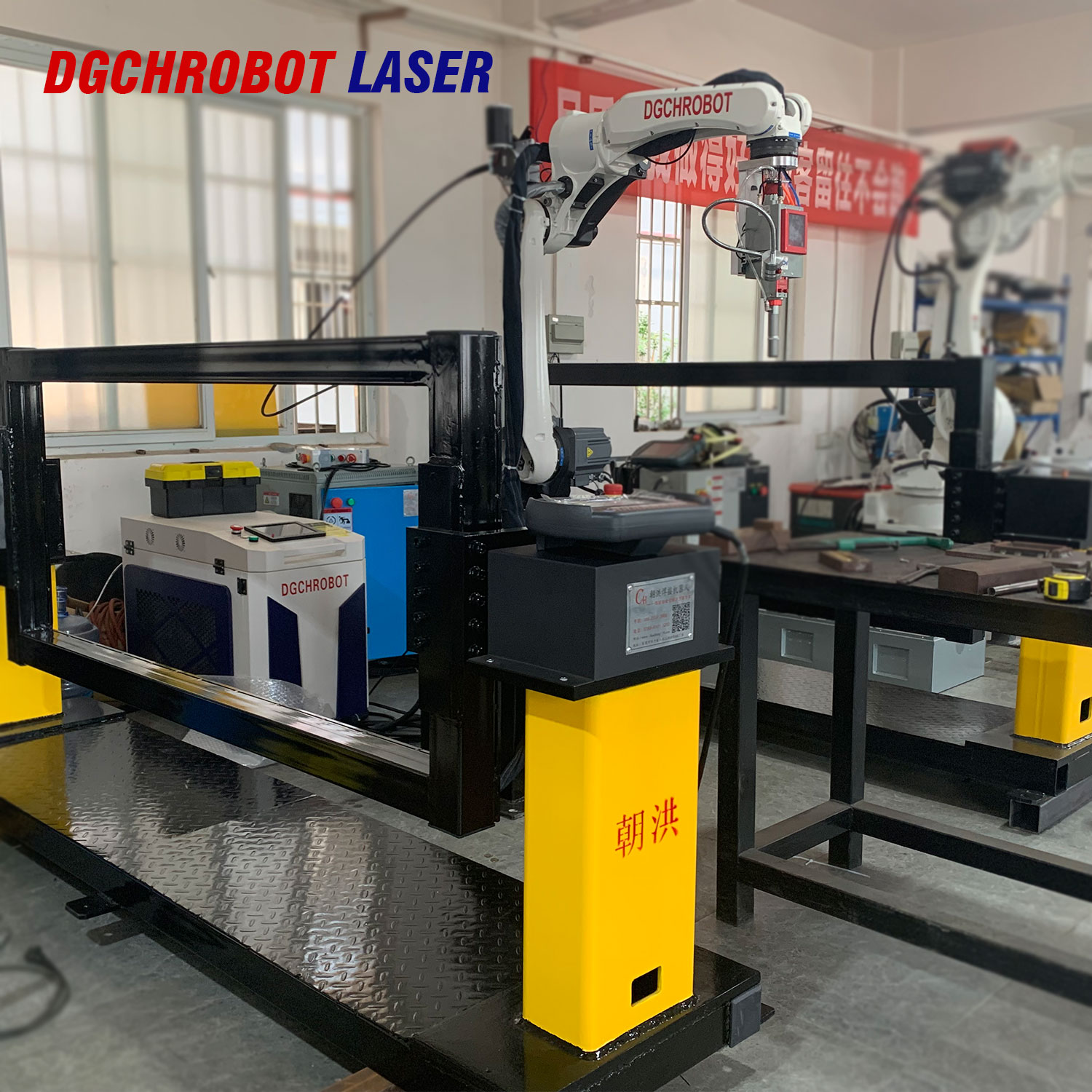
Dual-position laser welding workstation: efficient and precise welding solution
Against the backdrop of the increasing demand for welding efficiency and precision in modern manufacturing, the dual-position laser welding workstation, with its unique structural design and technological advantages, has become the core equipment in high-end fields such as aerospace, automotive manufacturing, and medical devices. By achieving deep integration of dual-position collaboration and laser welding technology, it not only solves the efficiency bottleneck of traditional single-position welding but also retains the high-precision characteristics of laser welding, providing an ideal solution for the batch production of complex components.
1. Dual-position laser welding workstation core features
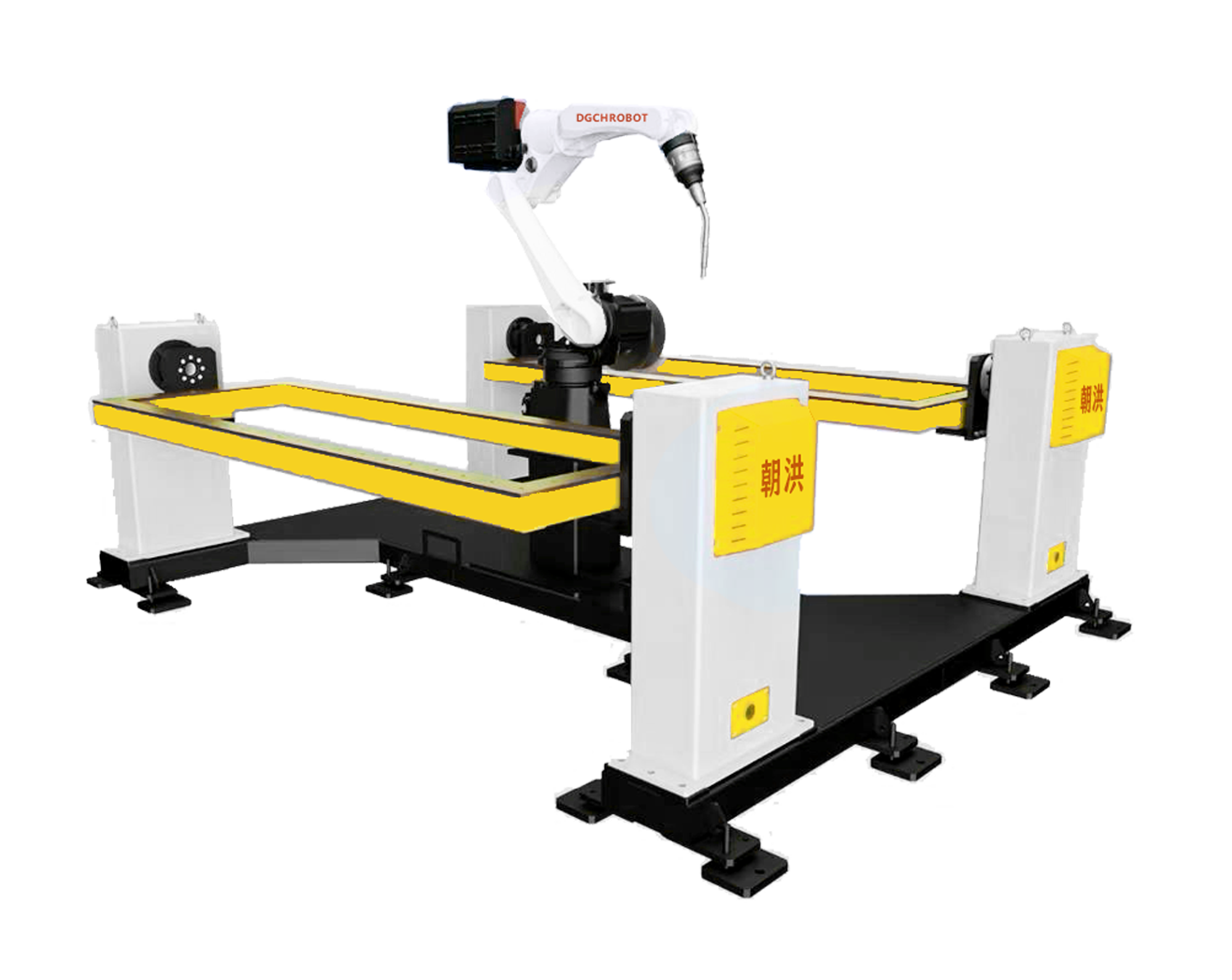
The dual-station layout is a significant structural feature of the collaborative operation. The workstation typically employs a rotating workbench or a translations dual-station design, where each station can independently complete the "clamping - welding - part removal" process, and alternating operations are achieved through program control: while one station is in the welding state, the operator or automated loading and unloading devices can perform clamping and part removal at the other station, completely eliminating the time waste of "welding waiting for clamping" in traditional single-station welding. The switching time for the rotating workbench dual-station is usually kept within 2-5 seconds, and the switching error for the translations dual-station can be controlled within ±0.01mm through the optimization of guide rail transmission accuracy, ensuring the consistency of the welding trajectory after station switching.
The high-precision adaptation of laser welding systems is the key to ensuring welding quality. The laser (such as fiber laser, CO₂ laser) built into the workstation can achieve an energy density of 10⁶-10⁸W/cm², which can instantly melt and solidify materials, and the heat-affected zone (HAZ) of the weld can be controlled within 0.1-0.5mm, much smaller than the 2-5mm of arc welding, which is especially suitable for welding heat-sensitive materials such as aluminum, copper, and titanium. The precision of the laser head and the robot's linkage further enhances the operational flexibility: the Chao Hong laser welding robot has a repeat positioning accuracy of ±0.03mm, and in combination with the vision positioning system (resolution ≤ 5μm), it can automatically identify the contour of the workpiece and the assembly deviation, and correct the welding path in real time, ensuring the accuracy of the weld position even if there is a clamping error of less than 0.1mm in the workpiece.
2. The significant advantages of the dual-position laser welding workstation
The technical features of the dual-position laser welding workstation are transformed into multiple advantages in production applications, reshaping the welding production model from the dimensions of efficiency, quality, and cost.
A leap in production efficiency is its ***core advantage. Compared with a single-station laser welding workstation, the dual-station design increases equipment utilization from 60%-70% to over 90% through parallel operation. Taking the welding of automotive transmission gears as an example, a single-station workstation can complete 30-40 pieces per hour, while a dual-station workstation, by eliminating the waiting time for clamping, can produce 50-60 pieces per hour, achieving an efficiency improvement of over 50%. For the welding of miniature parts (such as catheter connectors) in medical devices, the combination of dual-stations and automated loading and unloading mechanisms can achieve a daily production volume of 10,000+ pieces, meeting the needs of large-scale manufacturing.
The stability and consistency of welding quality with laser welding far exceed traditional welding methods. The high energy density of laser welding ensures a uniform weld penetration (deviation ≤ 0.05mm), and the concentrated heat input can control the deformation of the workpiece within 0.02mm/m, solving the deformation problem in the welding of thin-walled components (such as titanium alloy skins in aerospace). The standardized operation process of the dual-position avoids the individual differences in manual operation. After a certain automotive parts manufacturer introduced a dual-position laser welding workstation, the weld qualification rate increased from 82% in manual welding to 99.5%, and the rework rate decreased by more than 90%.
Flexible production capacity to meet the modern manufacturing demand for multi-variety and small batch sizes. The workstation stores welding parameters and trajectories for different workpieces in a modular program library. When changing products, only the corresponding program needs to be called and the dedicated fixture needs to be replaced, and the switching time can be controlled within 15-30 minutes. For example, in the welding of battery cell tabs for new energy vehicles, the same workstation can be compatible with different specifications (thickness 0.1-0.3mm) of welding through parameter adjustment, without the need to replace the core equipment, significantly reducing the equipment investment cost for multi-variety production.