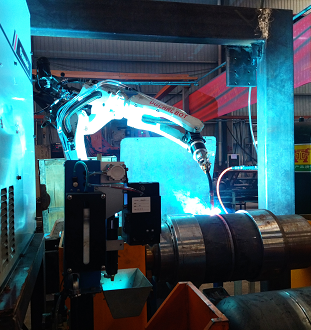
Welding robots and their supporting automated workstations directly reduce user production costs and build competitive barriers by replacing manual labor, improving efficiency, ensuring quality, and optimizing resources across multiple dimensions.
I. Direct Reduction of Core Production Costs
1. Significant Reduction in Labor Costs (The largest cost-saving component)
Welding is a high-intensity, high-skill job: skilled welders typically have monthly salaries ranging from 8,000 to 15,000 RMB (including social security and benefits). Furthermore, companies face challenges in hiring welders and high staff turnover (industry turnover rate exceeds 30%).
One welding robot can replace 2-4 welders (depending on process complexity). Calculating based on replacing 3 welders at 10,000 RMB/month each, a single robot can save about 360,000 RMB annually in labor costs. A setup with 10 robots could save approximately 3.6 million RMB per year.
Automated workstations (e.g., systems with positioners and conveyor lines) enable unmanned or minimally manned operations. Only 1-2 maintenance personnel are needed to monitor multiple machines, further reducing labor requirements.
Case Study: After a automotive parts factory introduced a 6-axis welding robot with a dual-station positioner workstation, the welding team was reduced from 12 people to 3, yielding annual labor savings of nearly 2 million RMB.
2. Reduction in Material Waste and Rework Costs
Manual welding, affected by fatigue and human factors, is prone to defects like weld deviation, undercut, and porosity, leading to rework rates typically between 5% and 15%. Robots, through programmed precise control of current, voltage, and speed with repeatability up to ±0.02mm, can increase weld pass rates to over 99%.
For example, in annual production of 100,000 welded parts, an 8% manual rework rate at 50 RMB per rework costs 400,000 RMB yearly. Robots can reduce the rework rate to below 0.5%, saving about 380,000 RMB annually.
Robots also optimize the consumption of welding wire/electrodes (e.g., by precisely controlling wire feed speed), reducing material waste by 3% to 8%.
3. Reduction in Equipment Maintenance and Energy Costs
Extended Equipment Service Life: Robots operate at a steady pace, avoiding "violent welding" (e.g., excessive pressure) sometimes seen in manual operation, thus protecting the service life of fixtures, welding machines, and other peripheral equipment (extending lifespan by 20%-30%).
Energy Optimization: Robots can be activated on demand. Integrated with pneumatic/electric fixtures in the workstation for rapid positioning, they reduce idle energy consumption. Some advanced workstations even incorporate energy recovery systems, lowering overall energy consumption by 10%-15%.
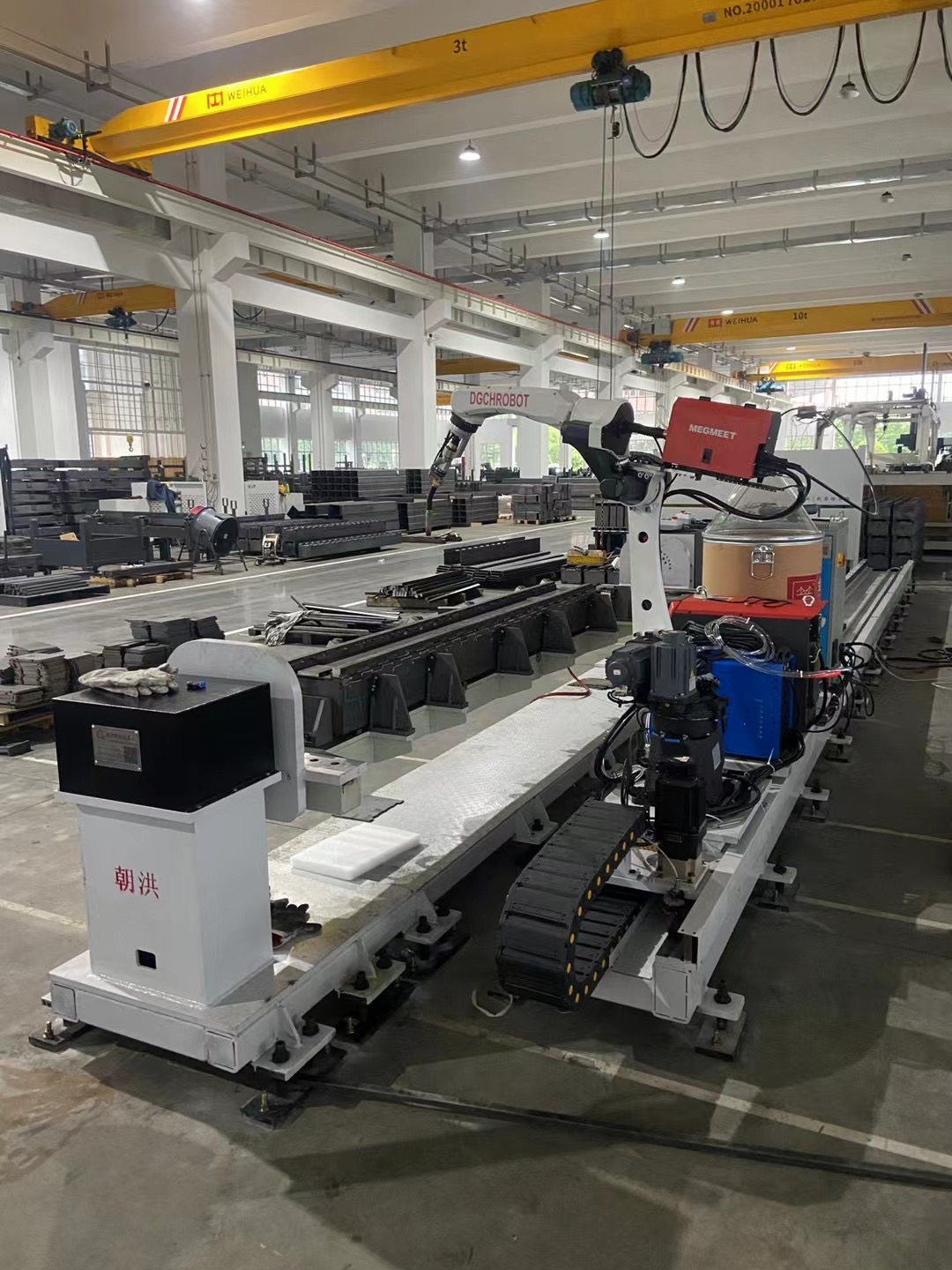
II. Indirectly Enhancing Production Efficiency and Reducing Unit Costs
1. 24/7 Continuous Operation for Doubled Capacity
Manual welding typically achieves only about 6-8 hours of effective work per day (including breaks and shift changes), whereas robots can operate uninterrupted 24 hours a day (requiring only minimal maintenance). This leads to a 2-3 fold increase in production capacity . For instance, a steel structure company that previously produced 50 tons of components per day with manual welding increased its daily output to 120 tons after introducing a robotic workstation. This surge in output significantly dilutes the unit costs associated with labor and equipment over time .
2. Shortened Production Cycles for Accelerated Capital Turnover
Automated workstations enable integrated welding processes, reducing waiting times between different production stages (such as manual handling and blueprint verification). This integration can shorten order delivery cycles by 40-60%, thereby lowering costs associated with inventory backlog, such as raw material storage fees and capital occupation interest .
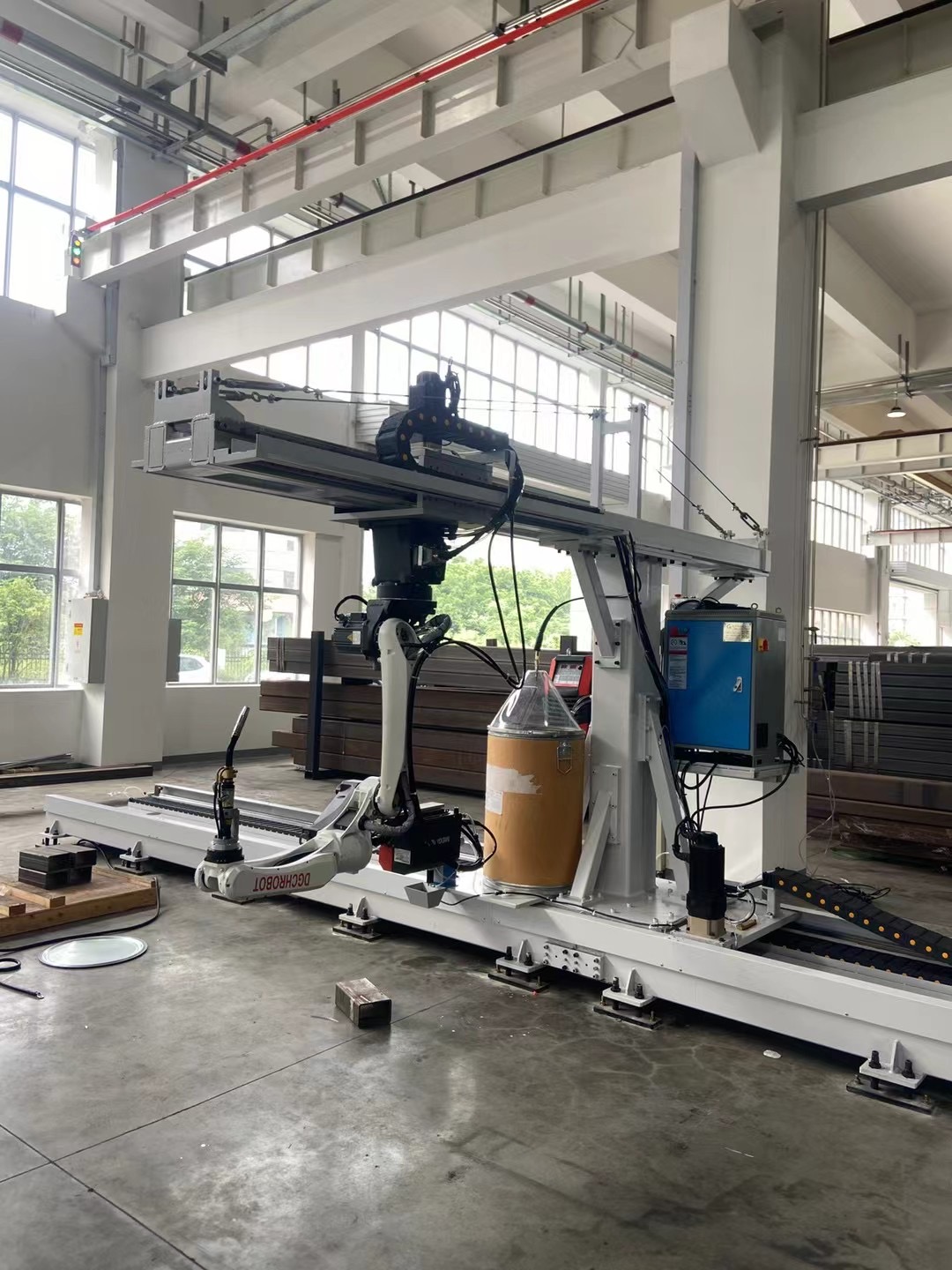
III. Building Differentiated Competitive Advantages and Enhancing Market Premium Capabilities
1. Ensuring Stability for Large-Scale Orders
Manual welding struggles to handle unexpected orders (such as urgent additions or batch production increases), whereas robotic workstations can achieve multi-variety, small-batch production through rapid changeover programming (e.g., calling preset programs, changing fixtures). This meets customer demands for both "customization and scale" .
For example, a construction machinery company, leveraging robotic flexible workstations, secured an overseas order for "five customized models per month" – an order its competitors, constrained by manual welding capacity, could not accept – allowing it to command a 15% price premium .
2. Enhancing Risk Resilience
Automated production lines offer greater resistance to external shocks such as "labor shortages" or "epidemic control measures." Robots do not require isolation, do not resign, and can maintain production continuity. In contrast, companies reliant on manual labor often face production stoppages and significant losses due to worker unavailability . The deployment flexibility of certain robotic solutions further supports this resilience .