Laser welding robots are high-precision automated equipment widely used in manufacturing, particularly in the automotive, aerospace, and electronics industries. To ensure welding quality and process stability, multiple monitoring systems are typically employed for real-time supervision and feedback control. The main monitoring systems include:
Vision Monitoring System
Acoustic Monitoring System
Optical Monitoring System
Electrical Signal Monitoring System
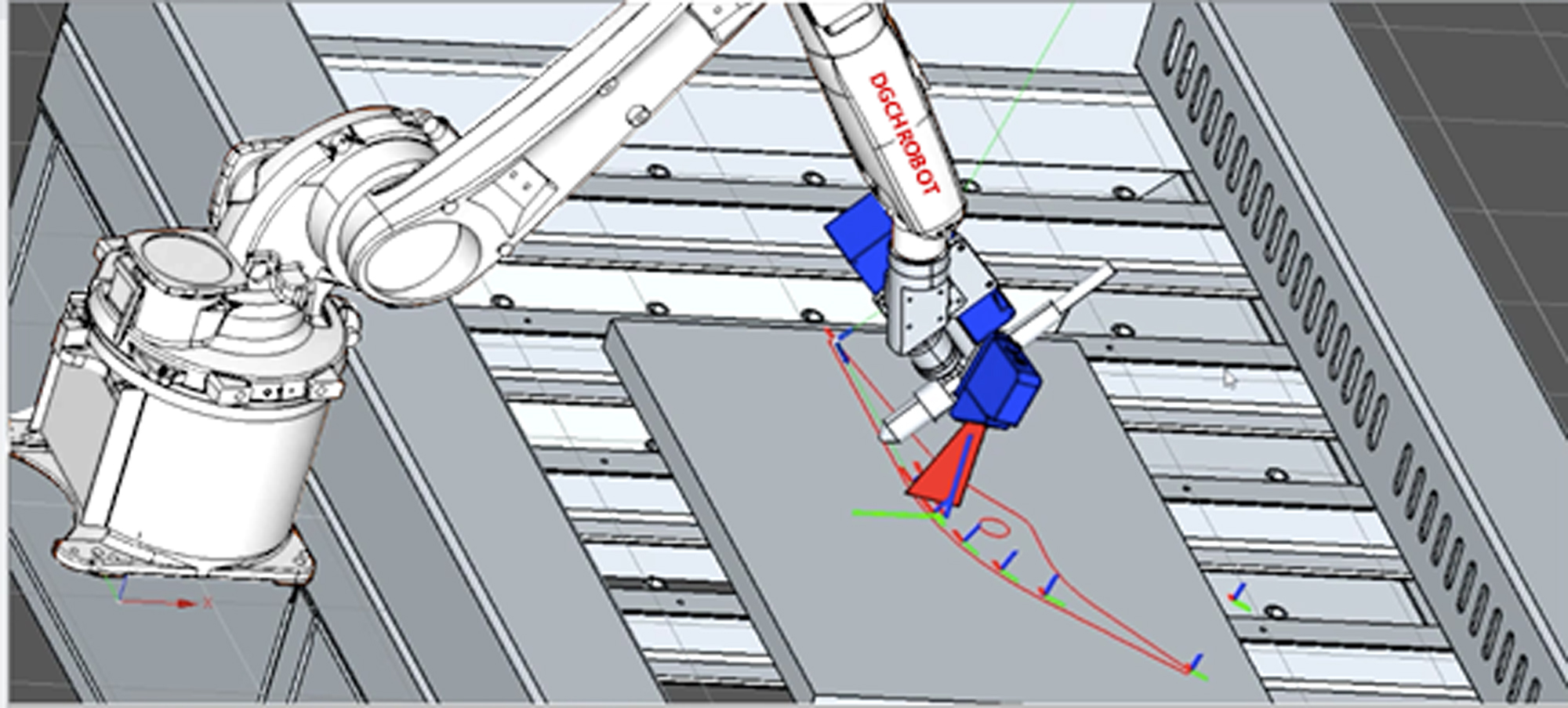
Detailed Working Principles of Various Monitoring Systems for Laser Welding Robots
I. Visual Monitoring System
🔹 Principle:
The visual monitoring system utilizes industrial cameras (such as CCD or CMOS cameras) combined with light sources (e.g., structured laser light, coaxial light) to capture real-time images of the welding area. By analyzing features in the images—such as weld pool morphology, seam width, spatter behavior, and seam position deviations—it assesses welding quality .
🔹 Operation Process:
High-speed imaging systems photograph the welding point at a high frame rate.
Images undergo preprocessing (e.g., noise reduction, contrast enhancement).
Key information is extracted using image processing algorithms (e.g., edge detection, template matching, machine learning).
Abnormalities (e.g., lack of penetration, deviation, porosity) are identified by comparing real-time images with standard references.
The system enables closed-loop control for automatic correction of the welding path .
🔹 Advantages:
II. Acoustic Monitoring System
🔹 Principle:
Welding processes generate sound waves at specific frequencies due to phenomena like plasma formation, metal evaporation, and droplet transfer. Acoustic monitoring uses highly sensitive microphones or ultrasonic sensors to capture these signals. By analyzing their spectral characteristics, the system infers the welding status .
🔹 Operation Process:
Directional microphones or acoustic emission sensors are positioned near the welding zone.
Sound signals during welding are collected in real time.
Fourier transforms or wavelet analysis extract spectral features.
Abnormal acoustic patterns (e.g., cracking, spattering) are distinguished from normal welding sounds.
Issues such as porosity, cracks, or power mismatches can be detected .
🔹 Advantages:
III. Optical Monitoring System
🔹 Principle:
This system primarily monitors optical signals generated during welding, such as plasma radiation, reflected laser light, and emitted light from the weld pool. By analyzing parameters like intensity and wavelength distribution, it evaluates energy coupling efficiency, plasma cloud stability, and dynamic weld pool behavior .
🔹 Operation Process:
Spectrometers, photodiodes, or high-speed optical sensors are employed.
Radiation (visible, UV, or IR bands) from the welding area is monitored.
Changes in spectral peaks or intensity fluctuations are analyzed.
For example, a sudden drop in plasma brightness may indicate insufficient penetration or shielding gas instability.
Some systems use coaxial optical paths without interfering with the main laser beam .
🔹 Advantages:
IV. Electrical Signal Monitoring System
🔹 Principle:
This system collects electrical parameters—such as current, voltage, power, and frequency—from the laser source, robot control system, and servo motors. By analyzing waveform disturbances, harmonic components, and anomalies, it indirectly reflects welding load conditions and equipment health .
🔹 Operation Process:
Laser output power, drive current, and voltage waveforms are captured.
Servo motor currents and feedback signals from the robot are simultaneously monitored.
Signal disturbances, harmonics, and sudden changes are analyzed.
Abnormal electrical signals may indicate hardware faults, degraded beam quality, or contaminated lenses.
Enables adaptive adjustment of process parameters .
🔹 Advantages:
Visual monitoring systems play a critical role in laser welding by enabling real-time supervision and intelligent analysis, significantly improving weld quality and production efficiency. As technology advances, these systems are evolving toward greater intelligence and integration, providing comprehensive support for smart manufacturing .